
What Travel Looks Like as an International Rugby Referee
I get asked a lot about the travel involved with refereeing, and it’s not the easiest role to explain because it doesn’t fit a normal weekly routine.
It’s not a Monday to Friday job. Like most roles in professional sport, the week is built around preparation and performance, with training during the week and games on the weekend. The difference for referees is that a lot of our preparation is individual, but we also now spend time working closely with teams.
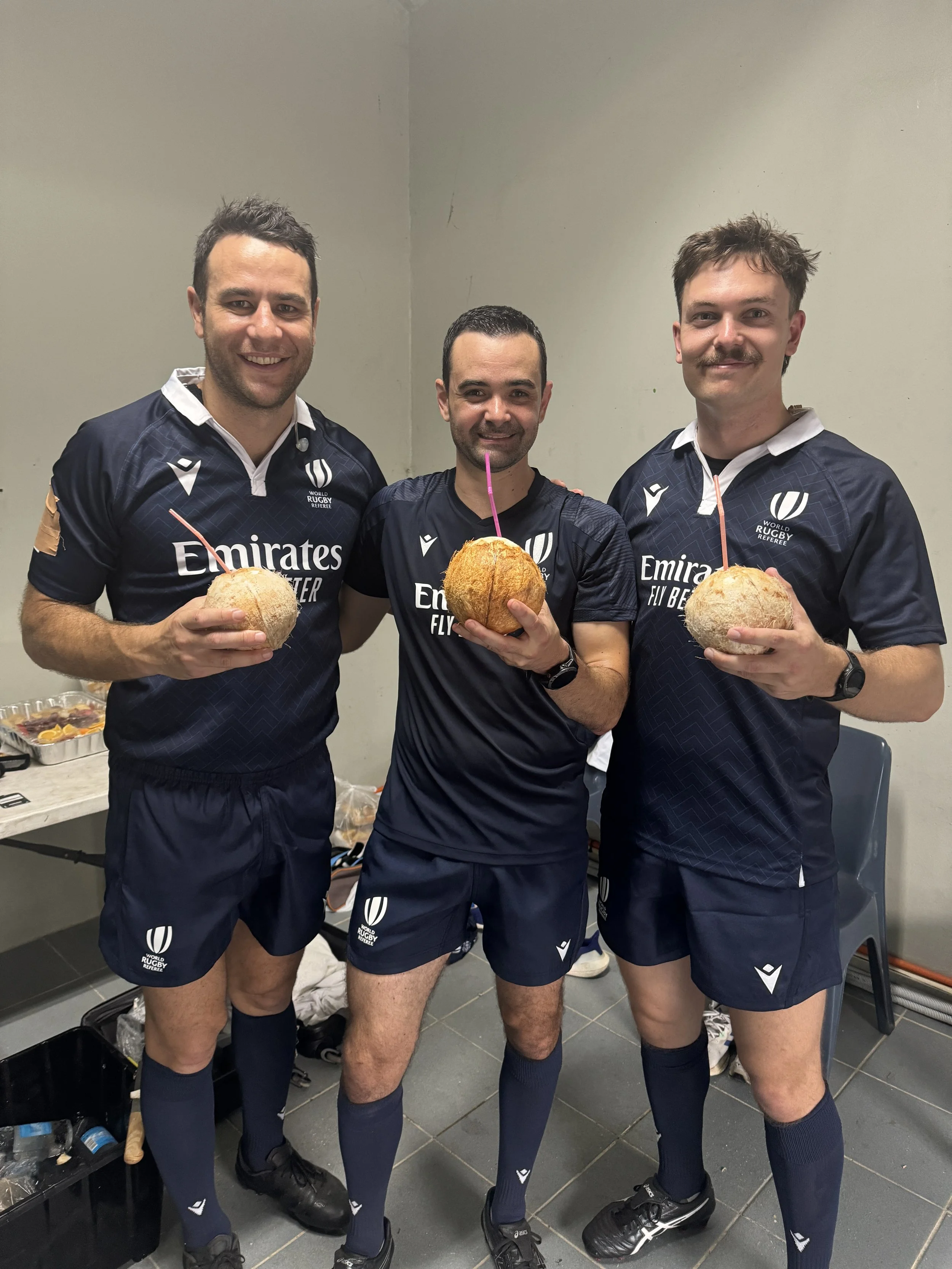
Close to home
Sometimes the best trips were close to home - Fiji v Tonga
In Super Rugby, we’re aligned with a team for the season. That means we go into their main training day during the week and referee their match preparation for about an hour. We’re also involved in unit work and team meetings, offering insight from previous games, what we’re seeing around the competition, and helping players understand how the law is being applied.
For referees, this is one of the biggest advantages we’ve had in recent years. It gives us real pictures of the game, not just what we see on a Saturday. You’re exposed to how teams actually train, how they build their game, and how players behave in those environments. That carries directly into better decision making on the field.
Outside of that, the week is built around review and preparation. Early in the week we go through the previous game in detail, and then shift our focus to the next match. You’re looking at trends, team habits, set piece detail, and individuals who might influence certain areas of the game. The goal is to remove as many surprises as possible before you step onto the field.
Travel in Super Rugby is usually pretty tight. For a Saturday game, we’ll typically fly on Friday and return Sunday. We always travel the day before to allow for any issues and to make sure we’re properly prepared. That first night is important as well, as we meet with our referee team and align on how we’re going to operate.
One of the biggest changes over time has been working in consistent referee groups. We now operate in pods, meaning you’re regularly working with the same assistant referees and TMOs. It creates accountability and cohesion, and you can see that in performance. The communication improves, trust builds, and the overall standard lifts compared to when combinations were changing every week.
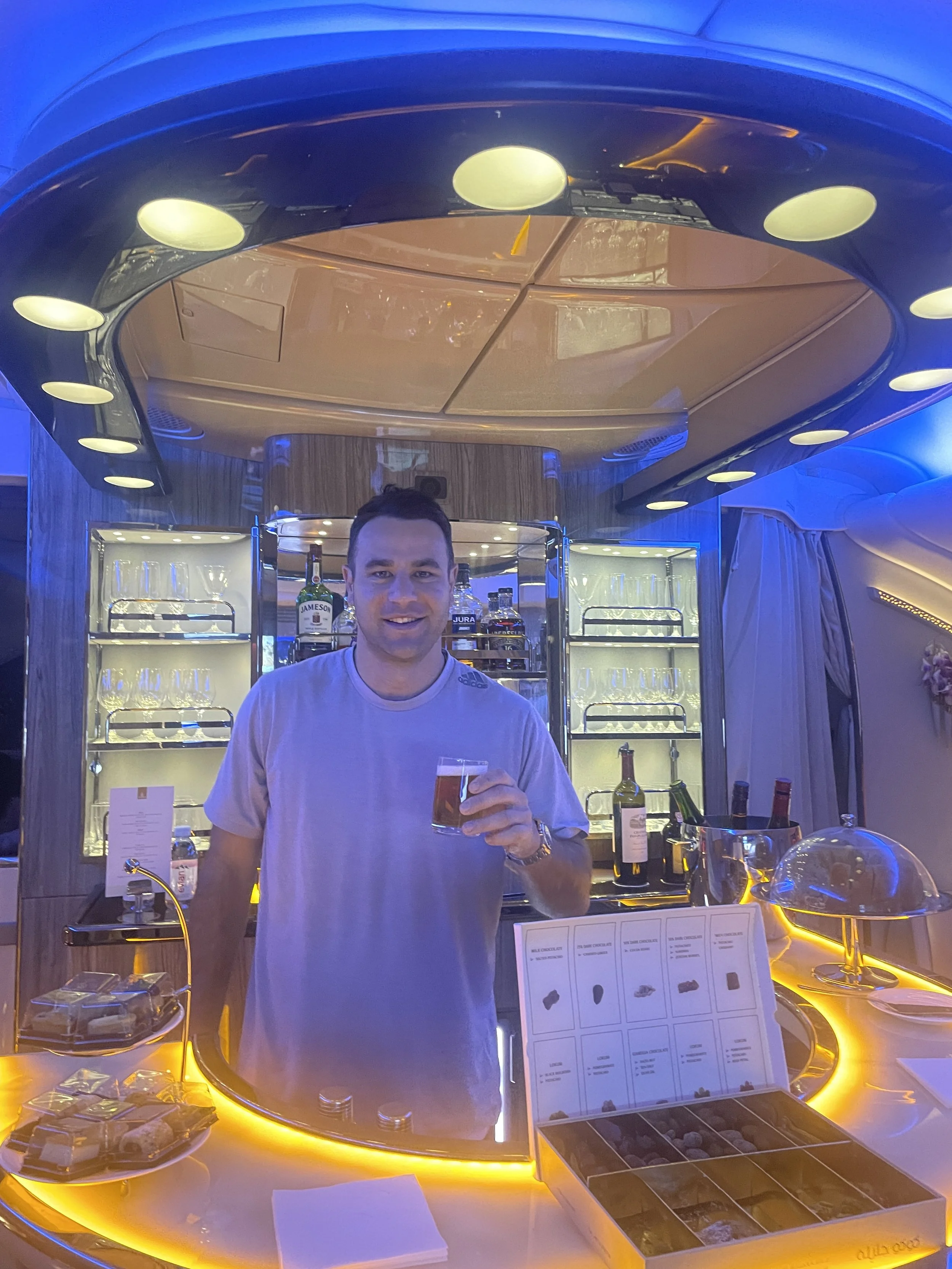
Business Class
I would never have believed them if I didn’t see the bar myself at 30,000ft
International travel is a different level altogether. Flights can take anywhere from 24 to over 30 hours, depending on where you’re going. Because of that, we usually arrive around a week before the game to allow time to adjust physically and mentally and to be ready to perform.
There are some benefits with that level of travel. Long haul flights are usually business class, and accommodation is high standard with food and transport covered. But those things are there because the demands are high. You’re expected to perform at a very high level regardless of the travel involved.
Over time, I’ve simplified how I approach travel. I used to try and control everything with routines, sleep strategies, electrolytes and recovery tools. Now I keep it simple. When I land, I go for a run, get moving straight away, and then sleep when I’m tired. That’s what works best for me.
Everyone has their own way of managing it, but the goal is always the same. Arrive ready, prepare well, and perform on the day.
Travel is a big part of the job, but it’s not really about the flights or the hotels. It’s about being able to adapt, prepare, and make good decisions no matter where you are in the world.
